The argan forest
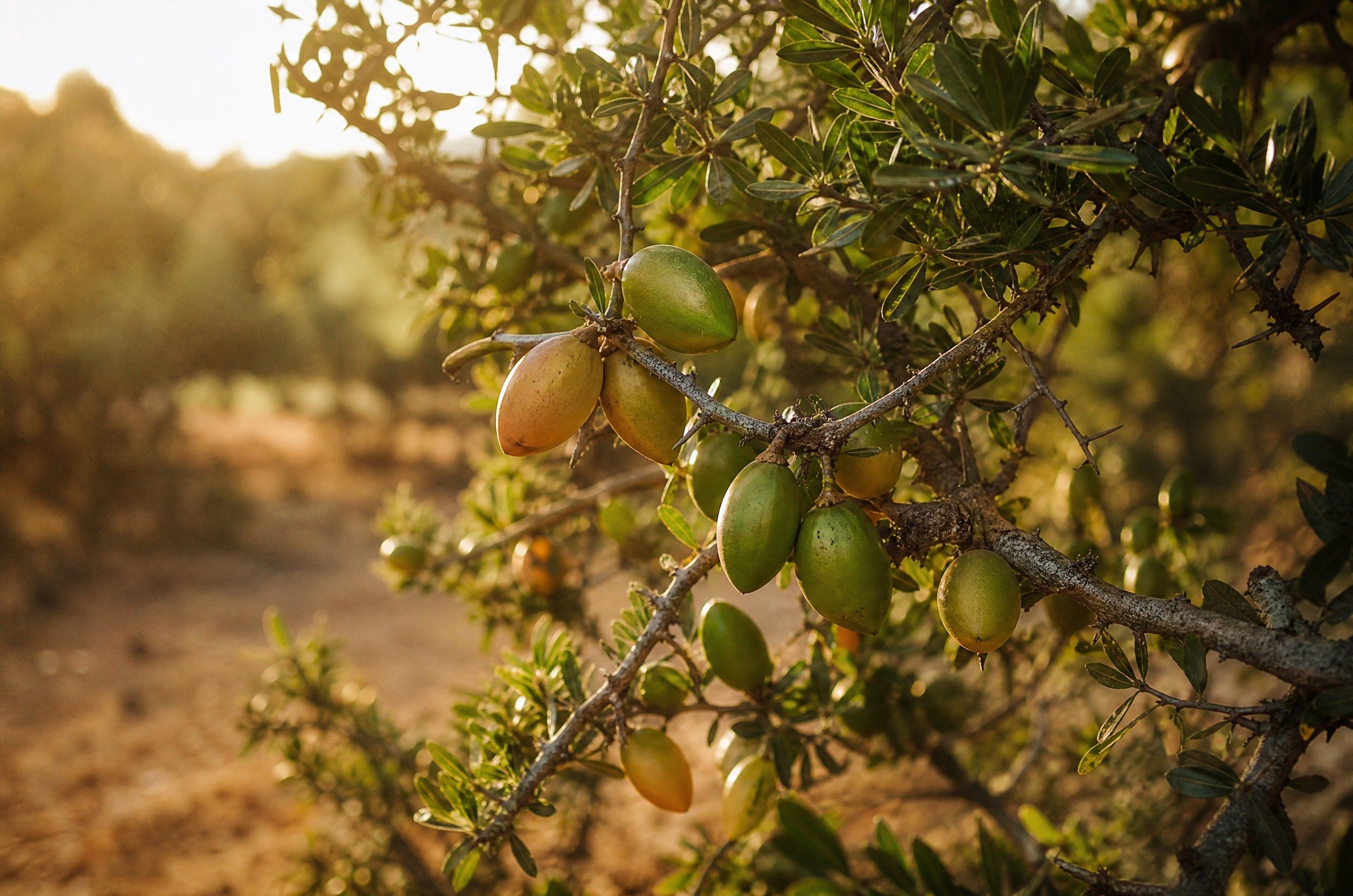
The argan tree is particularly special because it can only be grown in the south-west of Morocco, which has a unique ecosystem. The argan forest stretches out over 800,000 hectares across the southern region, reaching from the Souss Valley down to the mountains of the Anti-Atlas surrounding Agadir and Taroudant.
The argan trees of Morocco have been declared a UNESCO Biosphere Reserve for their unique habitat. The trees can be 200 years old, and sensitive handling of them ensures that wildlife, village life and the environment are all kept in harmony.
Goats in the branches
Mountain goats are typically seen climbing into the branches of the argan tree to feed on the fruit. It’s quite a spectacular view, and part of the picturesque landscape.
Traditionally, these goats also played an important part in the argan production process: the fruits of the argan tree were fed to the goats, whose digestive juices dissolve the coating on the shell.
Inside the fruit
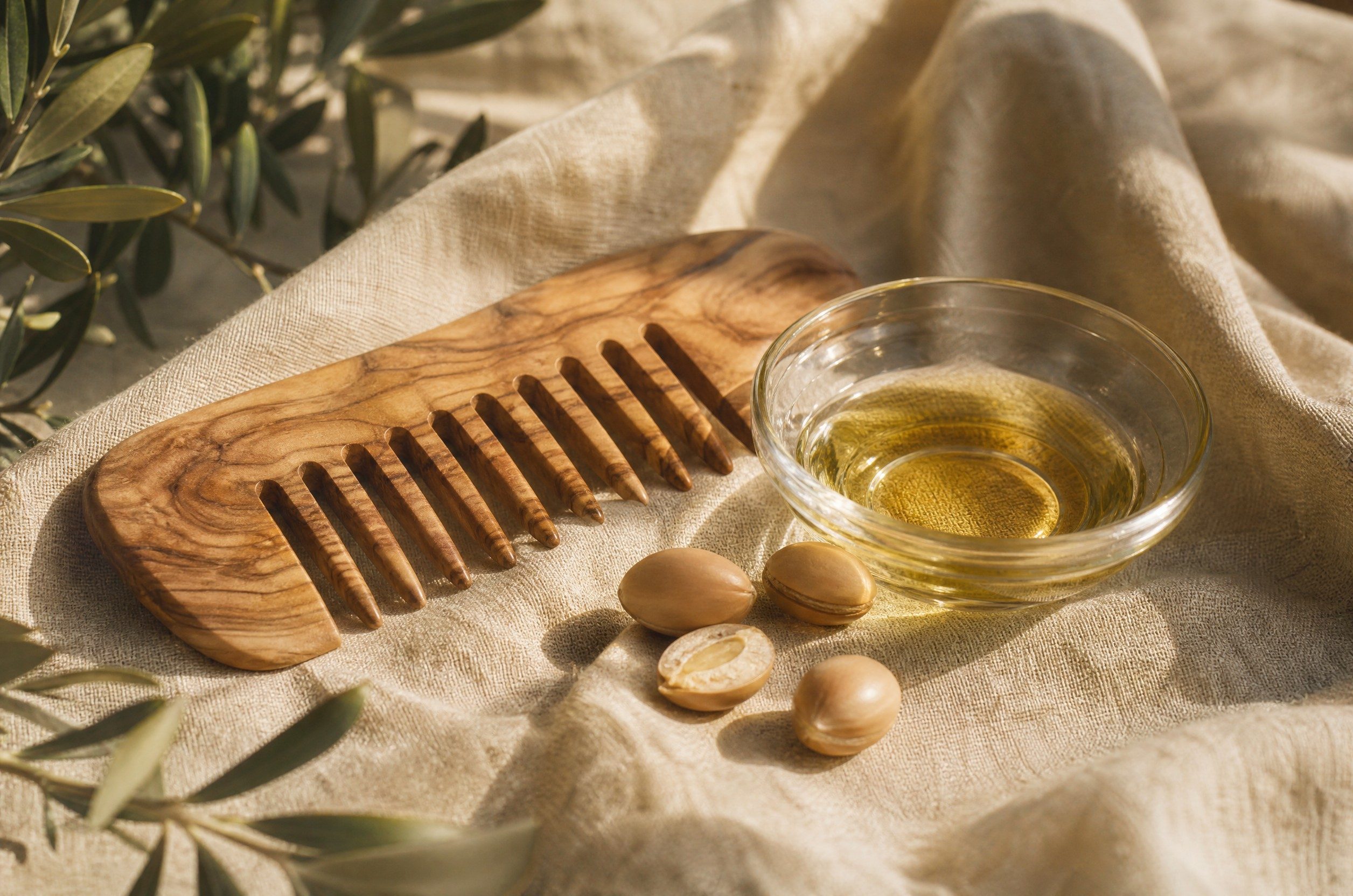
Argan oil is a plant oil extracted from the kernels inside the heart of the fruits that grow on argan trees. The fruit contains a pit with a tough shell, and inside it is where the “liquid gold” is found: small seeds, one to three per pit, holding 60 per cent oil.
Why it is called liquid gold
In the West, argan is typically known as liquid gold. The reason is that it has a long list of natural properties and can be used for medicinal, cosmetic and culinary purposes.
Argan oil is an excellent source of tocopherols (vitamin E) and fatty acids: oleic acid, linoleic acid, palmitic acid and stearic acid, all of which are known to be good for the skin and hair. It is known for its nourishing and restorative properties for skin, hair and nails.
An Amazigh tradition
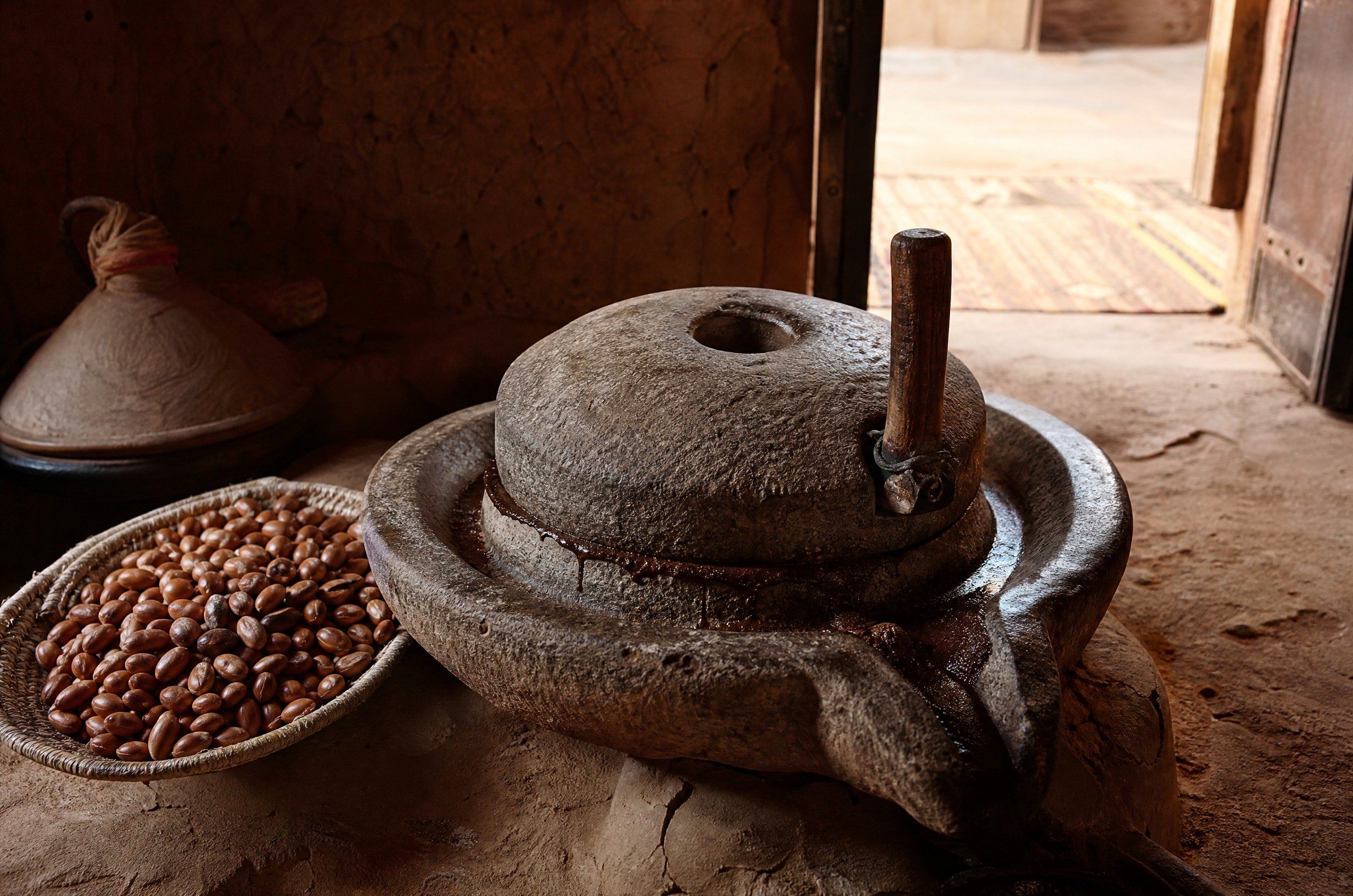
Argan oil has been used for thousands of years by Morocco’s indigenous people, known as Amazigh or Berbers, for culinary, cosmetic and medicinal purposes. Nothing is wasted: the leftovers from the traditional argan oil process are given to the goats as fodder.
In many of Morocco’s Berber villages, women earn an income by extracting and selling argan oil through local cooperatives for women.
Protecting the tree
Argan oil also has a positive impact on the environment and on local communities in Morocco:
- The argan tree plays a vital role in preventing desertification and preserving biodiversity in the region.
- Argan production provides employment and income for Berber women, who traditionally extract the oil by hand.
- Sustainable and ethical argan oil production helps protect the argan tree and preserve this valuable resource for future generations.
That is why Kenzul Atlas makes sure its argan oil is produced using traditional methods that benefit local people as well as maintaining the argan forests. Our argan oil is ethically sourced from the Souss Valley and certified organic.