The harvest
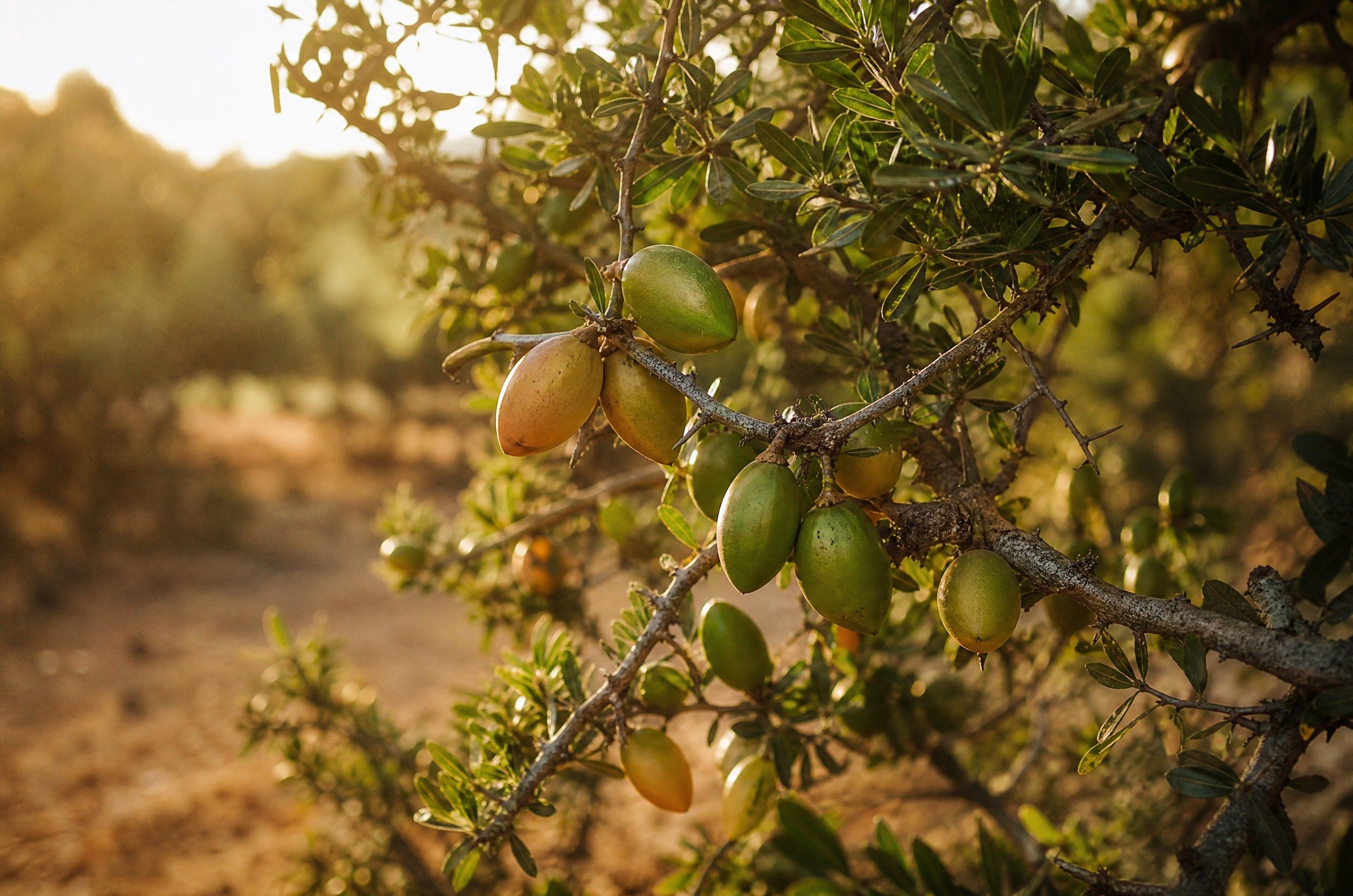
The argan fruit is picked from the tree during the harvest period, in July and August, and then left to dry for about seven days.
Cracking the nut
When the fruit is dry, the pulp is removed to obtain the argan nut, known as ‘Akkayn’ in Arabic. These nuts are then cracked open to reveal the kernel.
Extracting argan oil from the argan nut is a laborious, manual process:
- It takes 2 days just to crack 1.5 kg of argan nuts and extract the kernels.
- The work is very physical, as women traditionally use stones to crack the argan nuts.
From kernel to oil
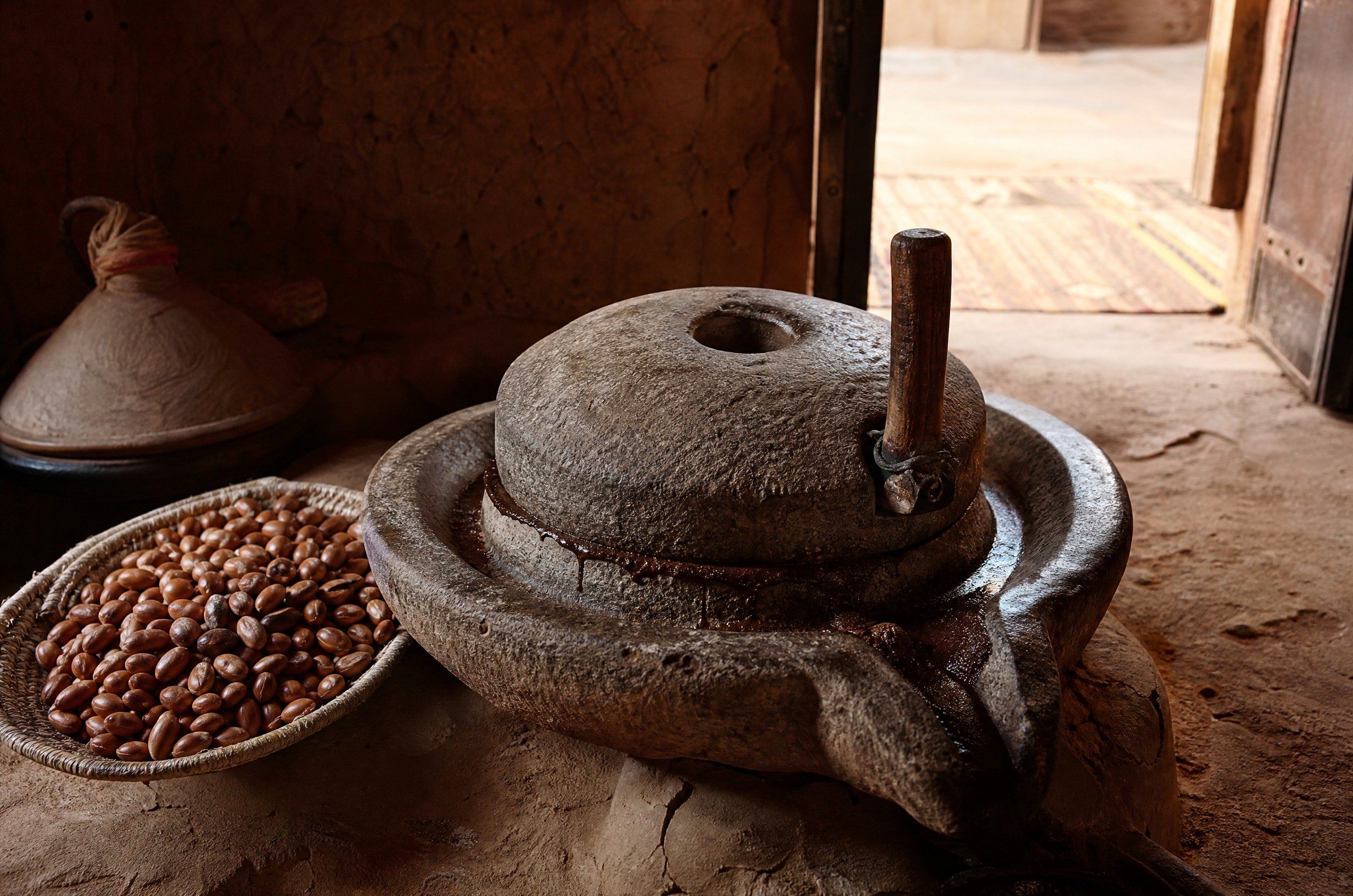
Culinary argan oil is made from kernels that are roasted first. Cosmetic argan oil needs a lot more work: the kernels are processed into a paste, traditionally with a stone hand mill. This part of the process is particularly labour-intensive for the Berber women. The argan paste is finally pressed to produce the argan oil.
25 to 30 kilos for one litre
It takes a staggering 25–30 kg of argan nuts to produce just one litre of argan oil, which helps you understand just how precious this oil is. Its manual, labour-intensive processing is a testament to the commitment to maintaining the quality and authenticity of this special oil, valued for centuries by the Berber people of Morocco.
How our oil is made
The first batch of Kenzul Atlas argan oil was produced in Taliouine, using the traditional method of extracting argan oil from the argan nut. Since then the company has grown and demand has increased: Kenzul Atlas Argan Oil is now produced in greater quantities in Agadir. It remains ethically sourced from the Souss Valley and certified organic.
- Cold pressed and unrefined, with no added chemicals or synthetic fragrances
- No SLS (sulfates), parabens or artificial colours, and free of silicones
- Not tested on animals
Sensitively harvested and processed with care, the result is pure argan oil with a slight natural nutty aroma.